When homeowners install a new roof, they are making a long-term investment in the structure. As such, it’s important to know how long that investment will last. Many roofing shingles are intended to function for decades, although their lifespan varies depending on the quality of the materials.
Understanding the longevity of a particular roofing product helps property owners to make informed decisions about how to maintain and when to consider replacing the roof.
Average Lifespan of Roof Shingles
To be able to determine the lifespan of the roof, homeowners need to know which type of materials they have. Since most property owners have some form of asphalt shingles, these shingles are generally divided into one of three categories:
- 3-Tab Asphalt Shingles: The cheapest of the three, 3-tab shingles are mostly made from asphalt and fit together like puzzle pieces. They are also the thinnest and the least durable. That means a typical lifespan of 15 to 20 years.
- Architectural Shingles: With a marginally higher investment, architectural or dimensional shingles provide a thicker composition, greater durability, and more visual interest. They are the typical choice for most residential applications. Their lifespan is typically 20 to 30 years or more.
- Luxury or Designer Shingles: Although mainly designed for curb appeal, luxury shingles are also thicker and tend to be more durable as a result. In exchange for a higher cost, property owners enjoy a more unique roof design that can remain strong for 25 to 30 years or more.
Owners who opt for other types of roofing shingles may have a wider range of longevity, depending on the roofing material. Metal roofs might last 40 to 70 years with adequate care. Tile roofs often go 50 years or more. Slate roofs can last over 100 years.
Factors That Affect Shingle Longevity
Although a shingle roof comes with an estimated lifespan and usually warranties to cover damage during that time, the life of the material depends on many factors. Homeowners need to take regular care of the roof to ensure that it remains intact for as long as possible. Factors include:
- Climate: Extreme temperatures, accumulating snow or ice, high winds, storm damage, or other harsh weather conditions can affect how long the roofing holds up.
- Ventilation: Insufficient attic ventilation traps heat near the roof, which can create ice dams that weaken the roofing structure over time.
- Installation: Effective installation can ensure each shingle adheres properly to the whole, providing a stronger surface as the shingles age.
- Maintenance: Scheduling routine inspections, keeping gutters clean, and removing debris can minimize leaks or long-term damage that prematurely age the roof.
- Shingle Quality: A higher-quality asphalt shingle, such as GAF shingles, can install more quickly and accurately, while lasting longer.
Addressing all of these potential issues is key to getting the maximum lifespan from the roof.
Signs Your Shingles Are Reaching the End of Their Life
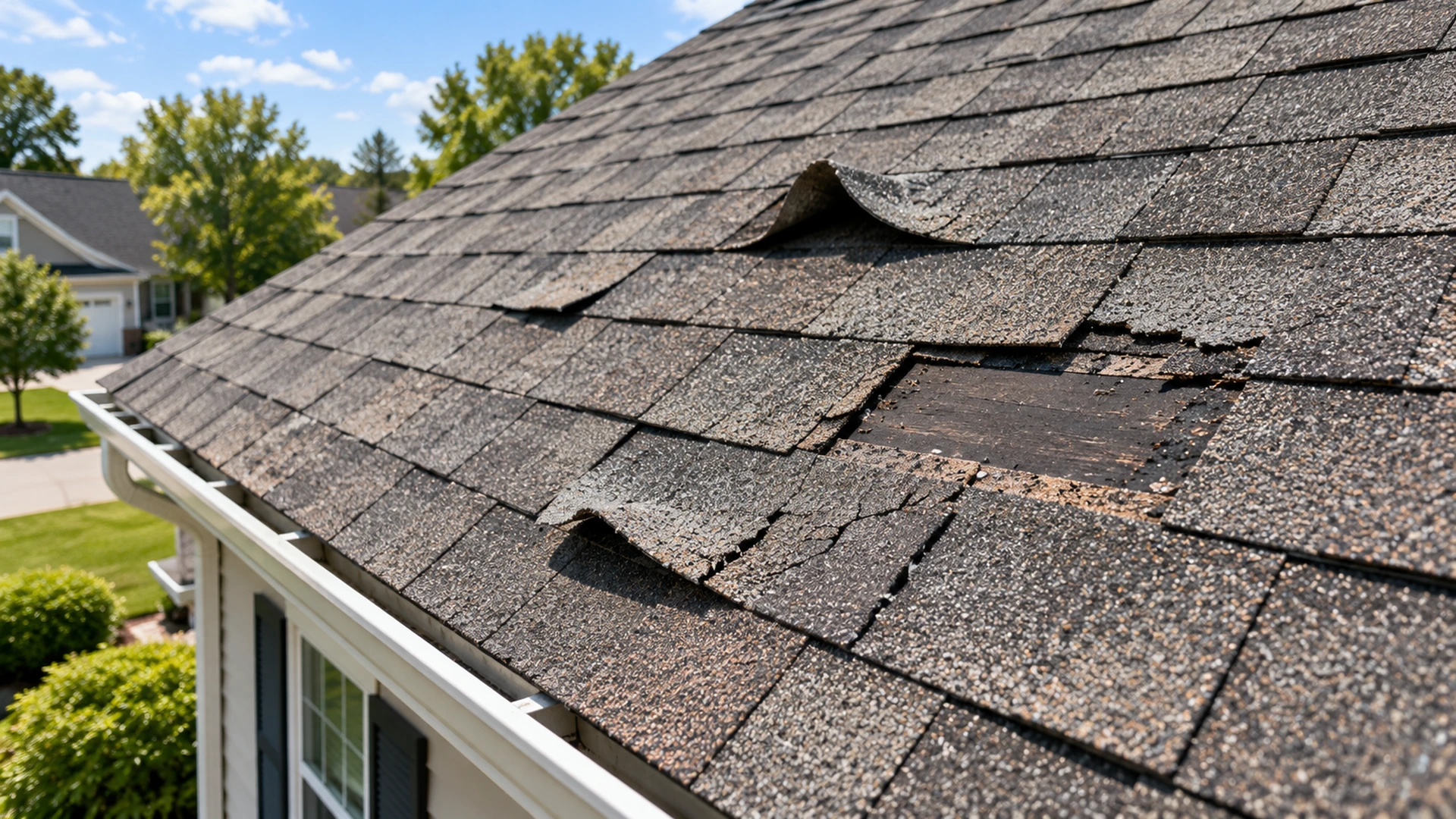
After many years, an asphalt shingle roof will start to show signs that it is approaching the end of its lifespan. Common issues include:
- Curling, cracking, or missing shingles
- Obvious granule loss on the shingles or piles of granules accumulating in gutters
- Persistent leaks or signs of water damage
- Moss or algae growth around shingles
- Sagging roofline (a sign of significant long-term damage)
An occasional missing shingle after a storm may not call for immediate roof replacement. Persistent issues that keep getting worse, even with careful maintenance, indicate that a replacement is necessary.
Ultimately, homeowners should call a professional whenever something doesn’t seem quite right with the roof. Many property owners do not go up to the roof regularly, so they may not be able to see what is happening. Calling a professional for a comprehensive inspection should happen on a yearly basis.
How to Maximize the Life of Your Roof
Although there are points where homeowners simply must replace the roof, there are plenty of things they can do before that to maximize the lifespan. Effective maintenance strategies include:
- Scheduling annual inspections or biannually for homes in areas with regular storm damage
- Clearing gutters to ensure that water and ice do not back up to the roof, which can damage the shingles over time
- Trimming overhanging branches to minimize debris accumulation and avoid falling branches during a storm
- Addressing minor problems with prompt repairs to keep them from getting worse
Since the roof cannot easily be seen or accessed from the ground, many property owners put off critical roof maintenance tasks, if they do them at all. Professional contractors stress the value of routine inspections to ensure that even minor issues can be corrected before they cause damage to the roof or the house itself.
When to Consider Roof Replacement
Although roof repairs are usually the best way to go for minor roof damage, there’s a point past which it makes more sense to replace. A single missing shingle or the occasional damaged area can be quickly repaired. Widespread problems are unlikely to stop with minor repairs, however.
Homeowners can make a decision by evaluating the expense and opportunity cost in not replacing. A roof with significant wear and repairs will be less energy-efficient. Further, the cost of replacing the whole roof is unlikely to be vastly more expensive than repeated repairs to keep the roof functional.
SOURCES
- https://www.straightlineconstruction.com/blog/30-year-roof-actually-last
- https://www.statefarm.com/simple-insights/residence/metal-roof-pros-and-cons
- https://www.globalroofinggroup.com/blog/how-long-does-a-tile-roof-last
- https://www.billraganroofing.com/blog/what-is-slate-roof
- https://besroiroofing.com/blog/3-tab-shingles-vs-architectural-shingles/
- https://www.billraganroofing.com/blog/architectural-shingles-vs-luxury-shingles
- https://www.owenscorning.com/en-us/roofing/blog/when-to-replace-your-roof
- https://absoluteroof.ca/top-five-signs-time-replace-asphalt-shingle-roof/
- https://eriehome.com/blog/how-long-do-30-year-architectural-shingles-really-last/
source https://lanescontracting.com/how-long-do-roof-shingles-last/


No comments:
Post a Comment