Choosing the best roofing material for a North Carolina home is not simply a matter of picking the product with the longest advertised lifespan or the lowest installation price. The roof has to handle the conditions surrounding the property, the design of the house, seasonal weather changes, and the way the roofing system is installed.
North Carolina presents an interesting challenge because weather conditions can vary significantly across the state. Homes near the coast may face strong winds, heavy rain, salt exposure, and tropical systems. Properties throughout the Piedmont regularly experience summer heat, thunderstorms, heavy rain, and occasional hail or winter weather. Mountain communities can see colder temperatures, snow, ice, and repeated temperature changes.
Because of those differences, there is no single roofing material that is automatically right for every North Carolina property.
For many homeowners, architectural asphalt shingles provide a practical balance of cost, appearance, repairability, and weather performance. Metal roofing may make more sense for homeowners who place greater value on long-term durability and rain shedding. Slate, tile, synthetic roofing, and specialty systems can also work well when the home and budget support them.
The best choice comes from matching the roofing system to the property rather than choosing a material based on one feature alone.
What North Carolina Weather Requires From a Roofing System
A roof in North Carolina has to perform through several different types of weather stress.
Heat is one consideration. Roof surfaces can become extremely warm during sunny summer days, particularly when the roof has limited shade. Repeated heating and cooling can affect roofing materials, sealants, flashing, fasteners, and other components over time.
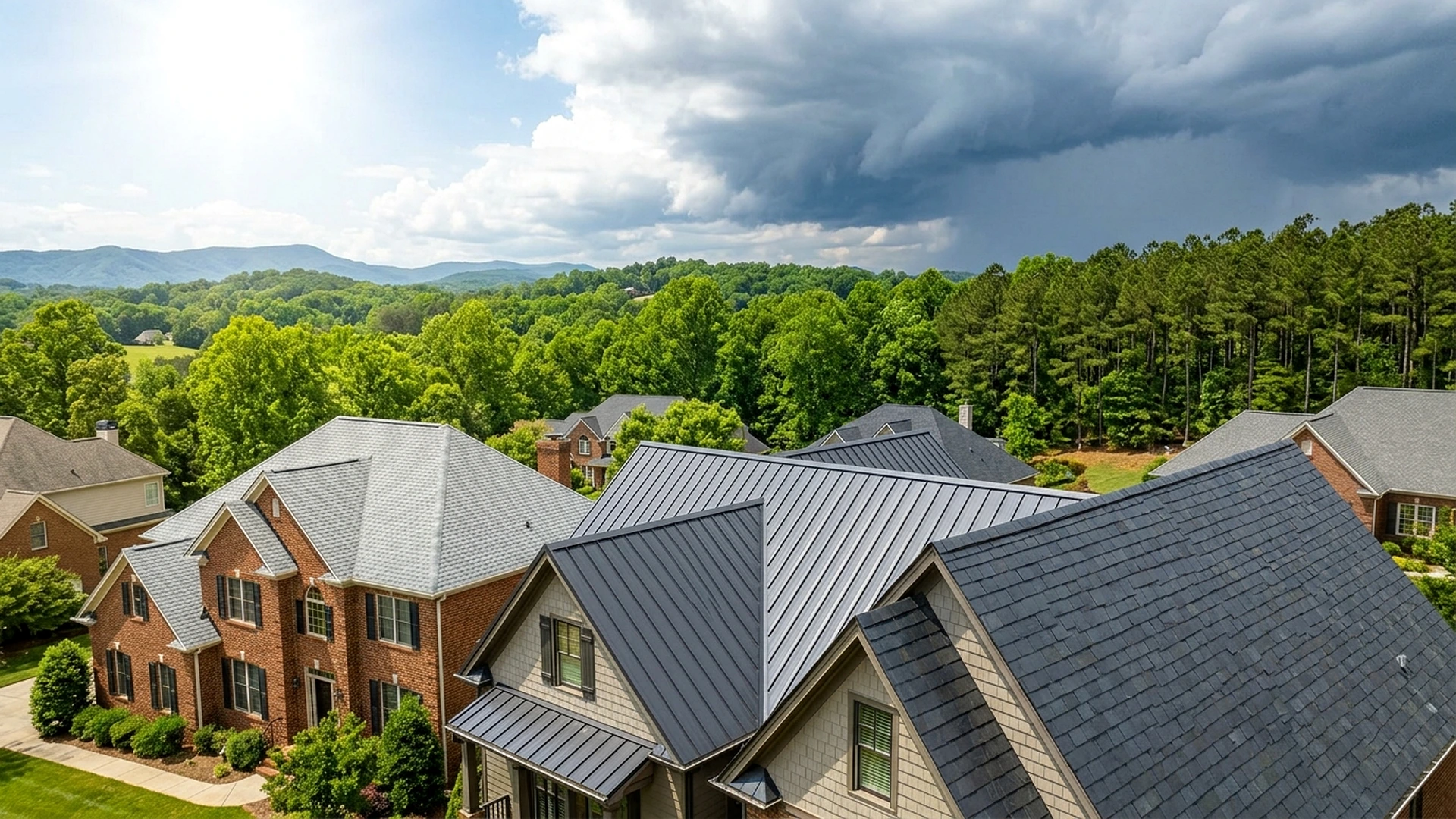
Heavy rainfall is another concern. Thunderstorms and tropical weather can place large amounts of water on a roof within a relatively short period. A roofing material may shed water effectively, but problems can still develop when valleys, flashing, vents, penetrations, gutters, or drainage areas are poorly designed or damaged.
Wind adds another layer of stress. Strong gusts can place pressure on roof edges, shingles, panels, ridge components, flashing, and roof decking. Once wind lifts or damages part of a roofing system, rain has a much easier path into the structure.
Hail can also damage shingles, flashing, vents, gutters, and other exposed components. Damage may not always be obvious from the ground.
Winter conditions matter too. Depending on location, North Carolina homes may experience freezing temperatures, snow, ice, and freeze-thaw cycles.
That means homeowners should evaluate more than the visible roof covering. A dependable roofing system also relies on proper decking, underlayment, flashing, ventilation, drainage, fasteners, edges, penetrations, and installation.
Architectural Asphalt Shingles Fit Many North Carolina Homes
Architectural asphalt shingles are one of the most practical choices for residential properties throughout the state.
They work with a wide range of home styles, are available in many colors and profiles, and can usually be repaired in smaller sections if localized damage occurs. Homeowners can also choose between different product levels depending on budget and performance priorities.
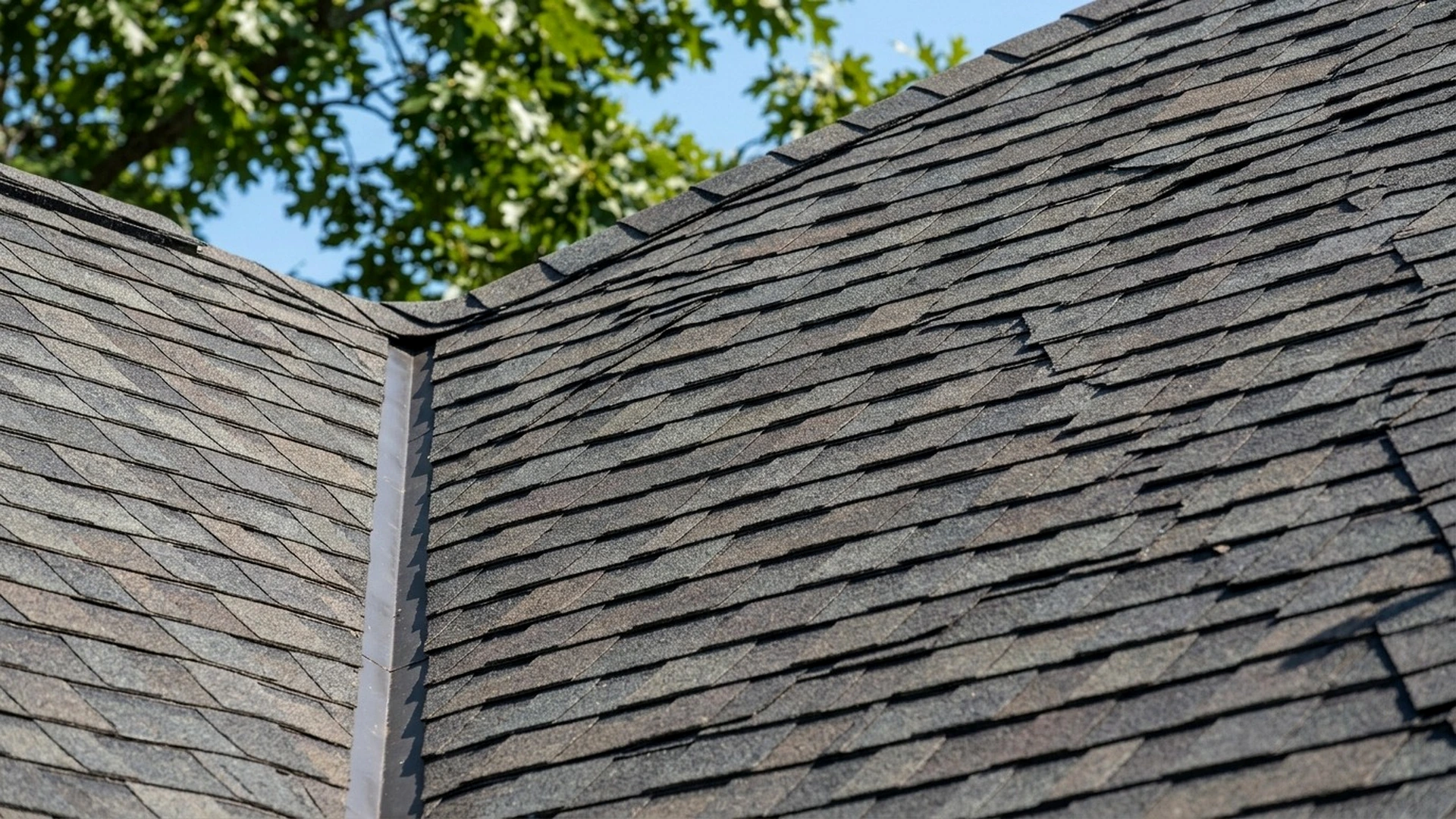
For someone considering roof replacement services, architectural shingles are often a reasonable place to begin the material comparison.
Their performance, however, depends heavily on the specific product and the installation.
Not all architectural shingles are identical. Different products may use different construction methods, sealant systems, reinforcement, impact classifications, and wind ratings.
The installation underneath the shingles matters just as much. Proper fastening, roof deck condition, underlayment, starter strips, flashing, ridge components, and ventilation all contribute to the finished system.
A homeowner comparing shingle estimates should therefore ask for the exact manufacturer and product line instead of accepting a proposal that simply lists “architectural shingles.”
When Asphalt Shingles Make Sense
Architectural shingles may be particularly suitable when:
- The homeowner wants a familiar residential appearance.
- Initial project cost is an important consideration.
- The house has a standard steep-slope roof design.
- Future localized repairs should remain relatively straightforward.
- The homeowner wants access to a broad range of colors and styles.
- The roofing contractor regularly installs and services the selected system.
A properly selected shingle system can work well across many North Carolina communities when the product and installation are suited to local exposure.
Metal Roofing Can Be a Strong Long-Term Option
Metal roofing deserves consideration for homeowners who are evaluating long-term ownership, rain shedding, maintenance requirements, and resistance to many common weather exposures.
Several different systems fall under the term “metal roofing.” Standing-seam panels, exposed-fastener systems, metal shingles, and other profiles should not automatically be treated as identical products.
Standing-seam systems use raised seams between panels and typically conceal many of the primary fasteners. Other metal roofing systems may use exposed fasteners or different attachment methods.
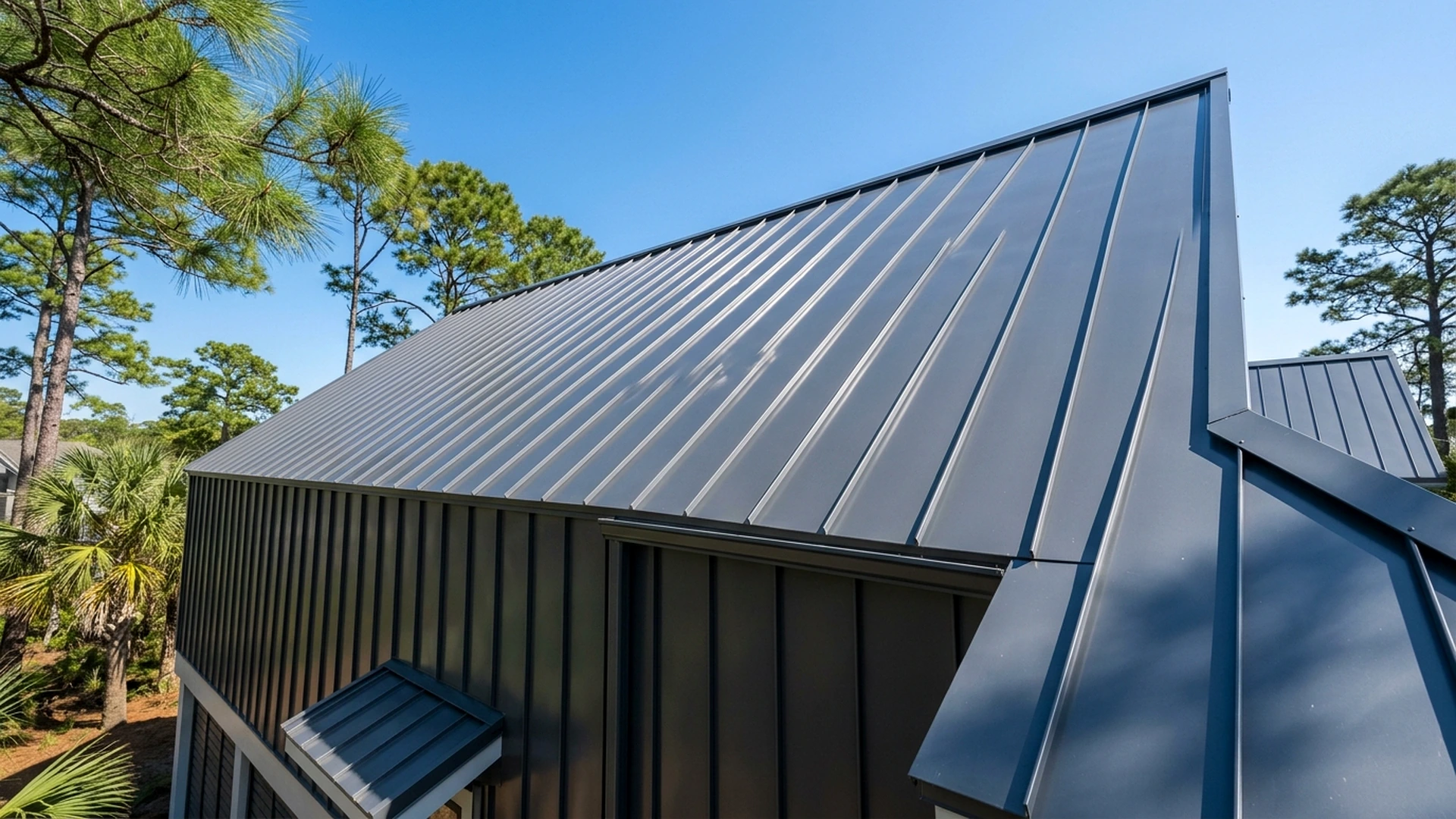
Installation quality is especially important.
Panel attachment, clips, fasteners, seams, flashing, roof edges, penetrations, transitions, and underlayment all affect how the roof behaves during wind and heavy rain.
A high-quality material cannot compensate for weak detailing.
Why Homeowners Consider Metal
Homeowners may consider metal when they want:
- A roofing material suitable for long-term ownership.
- Strong water-shedding characteristics.
- A distinctive architectural appearance.
- A system available in several profiles and finishes.
- Less concern about individual shingles becoming loose or damaged.
- Roofing that can perform across a range of weather conditions when correctly installed.
The main consideration is often initial cost. Metal roofing can require a larger upfront investment than many asphalt shingle systems.
That does not automatically make one option better than the other. A homeowner expecting to move relatively soon may evaluate that investment differently from someone planning to remain in the property for decades.
The comparison should be based on the complete installed system and the homeowner’s plans.
Coastal North Carolina Requires Greater Attention to Wind and Water
Homes closer to the North Carolina coast face a different combination of roofing concerns than properties farther inland.
Strong coastal winds and tropical systems can test several parts of a roof at once. The visible roofing material receives much of the attention, but damage can also involve roof decking, edges, flashing, ridge components, soffits, penetrations, and water-resistant layers beneath the roof covering.
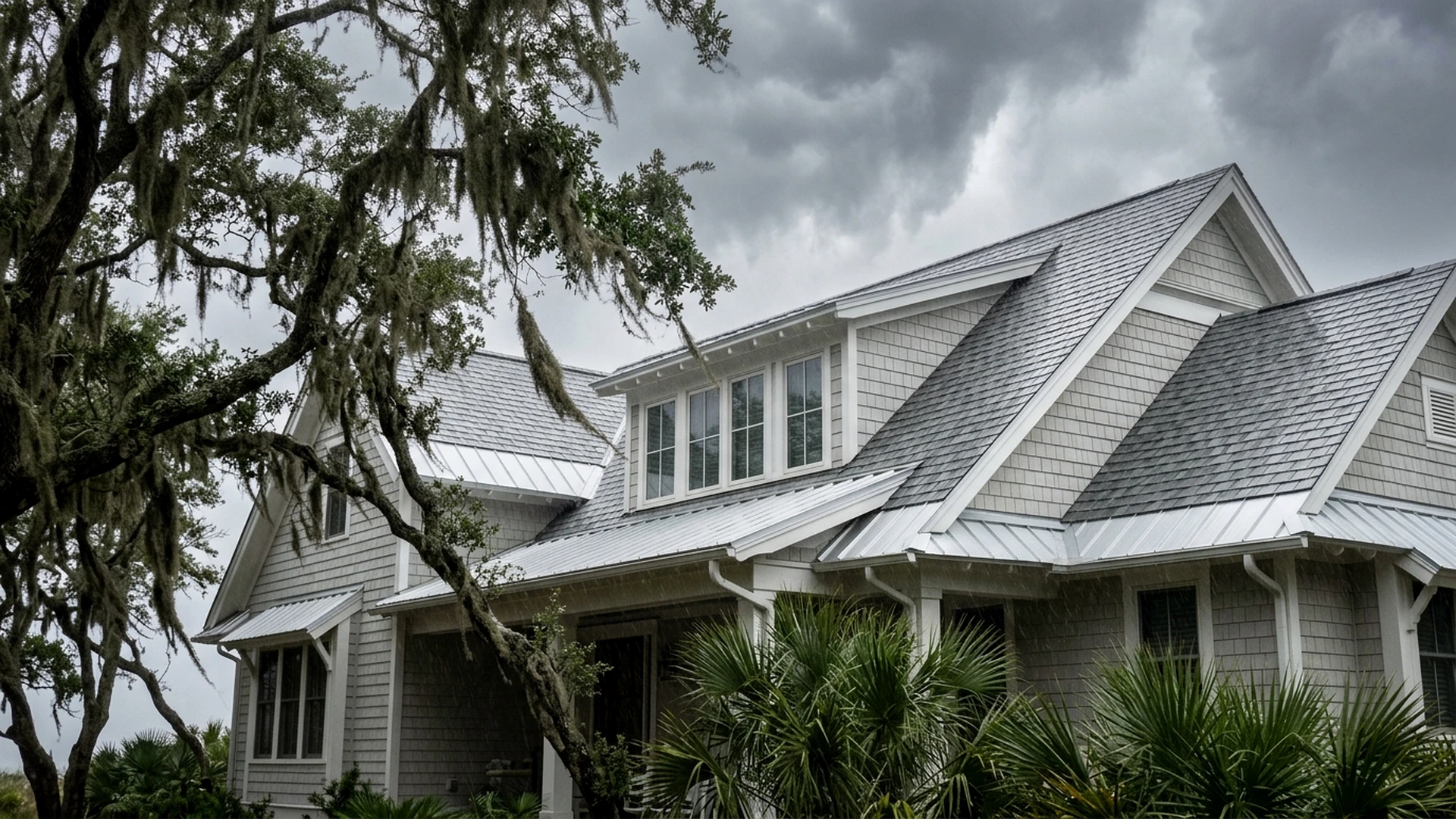
That makes system design especially important.
A homeowner evaluating shingles for a coastal property should pay close attention to the specific product’s wind requirements and the manufacturer’s installation instructions. Metal roof owners should look closely at panel attachment, edge details, seams, and flashing.
Water protection below the visible roofing material also deserves attention.
If wind damages part of the outer covering, a properly designed layer underneath can provide additional protection until repairs are completed.
After a major storm, homeowners should avoid assuming that a roof is fine simply because there is no visible leak indoors. A professional roof inspection can help identify damaged shingles, flashing, penetrations, vents, panels, or other areas that may not be easy to evaluate from the ground.
When significant weather damage is found, Lane’s information about storm damage roof repair can help homeowners understand what the next steps may involve.
Roofing Materials for the Piedmont and Triangle
Central North Carolina homeowners usually need a roof capable of dealing with several different conditions rather than one dominant hazard.
Summer heat, thunderstorms, wind, heavy rain, hail, falling branches, and occasional freezing conditions can all affect a roofing system.
That makes versatility valuable.
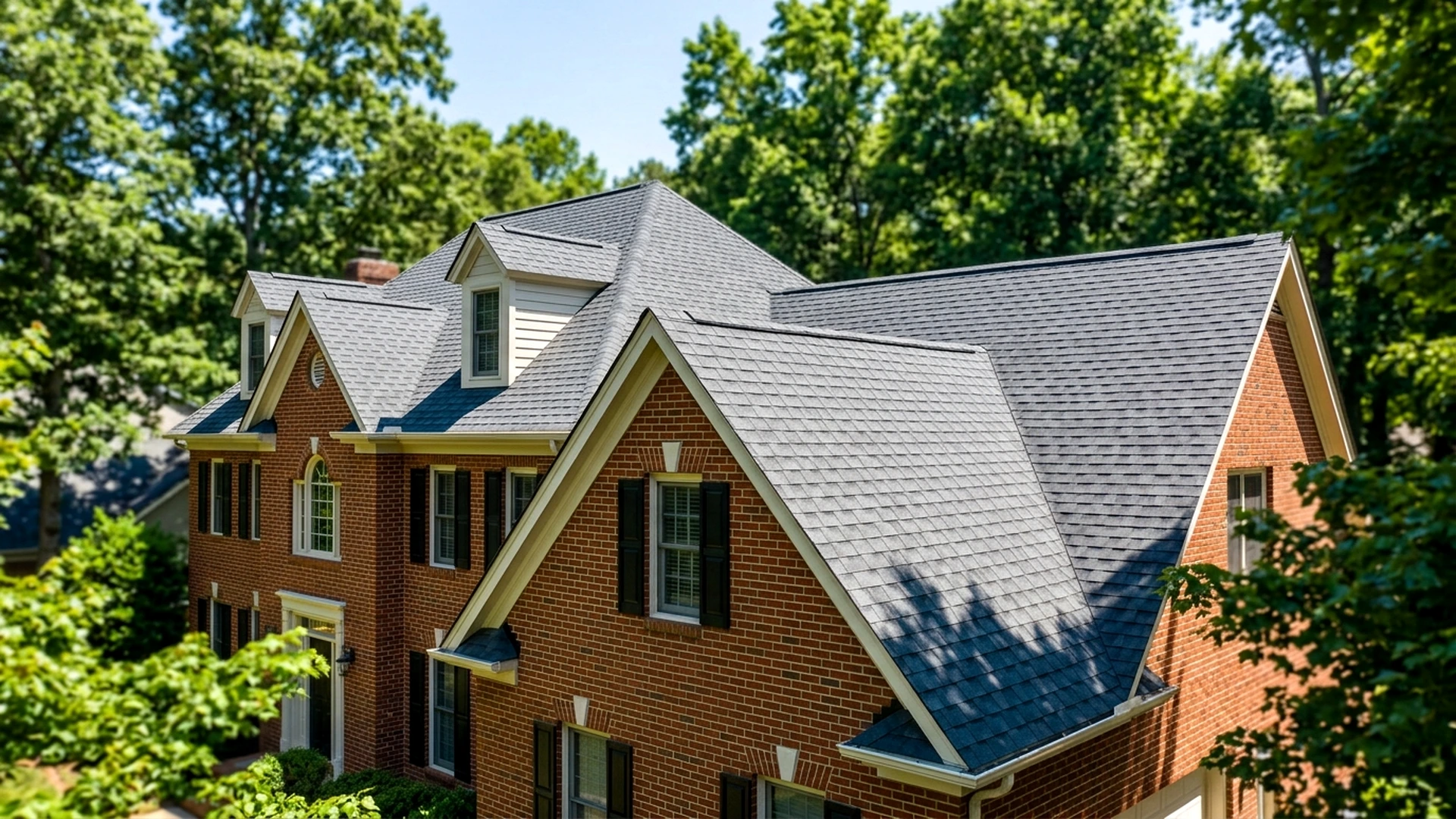
Architectural shingles often fit this environment because homeowners can choose from many products with different performance characteristics and price points.
Metal roofing can also work well throughout the Piedmont when the homeowner prefers its appearance, construction, or ownership profile.
The better decision often comes down to the house itself.
Consider two homes located in the same neighborhood.
One property has a straightforward roof with wide open exposure and little tree coverage. Another has several valleys, dormers, roof penetrations, mature trees, and shaded areas that remain damp longer after rainfall.
Although both homes experience similar weather, their roofs may have different vulnerabilities.
Material recommendations should account for those differences.
Homeowners in communities served by Lane’s Contracting can review the company’s broader roofing services when comparing repair, inspection, and replacement options.
Mountain Homes Need More Attention to Cold Weather and Roof Design
Western North Carolina introduces another set of roofing considerations.
Higher elevations generally experience colder winter conditions than much of the Piedmont and Coastal Plain. Some properties may also receive more snow and experience more frequent freezing conditions.
Temperature changes can affect roofing components over time as materials expand and contract.
Roof pitch and drainage become important as well.
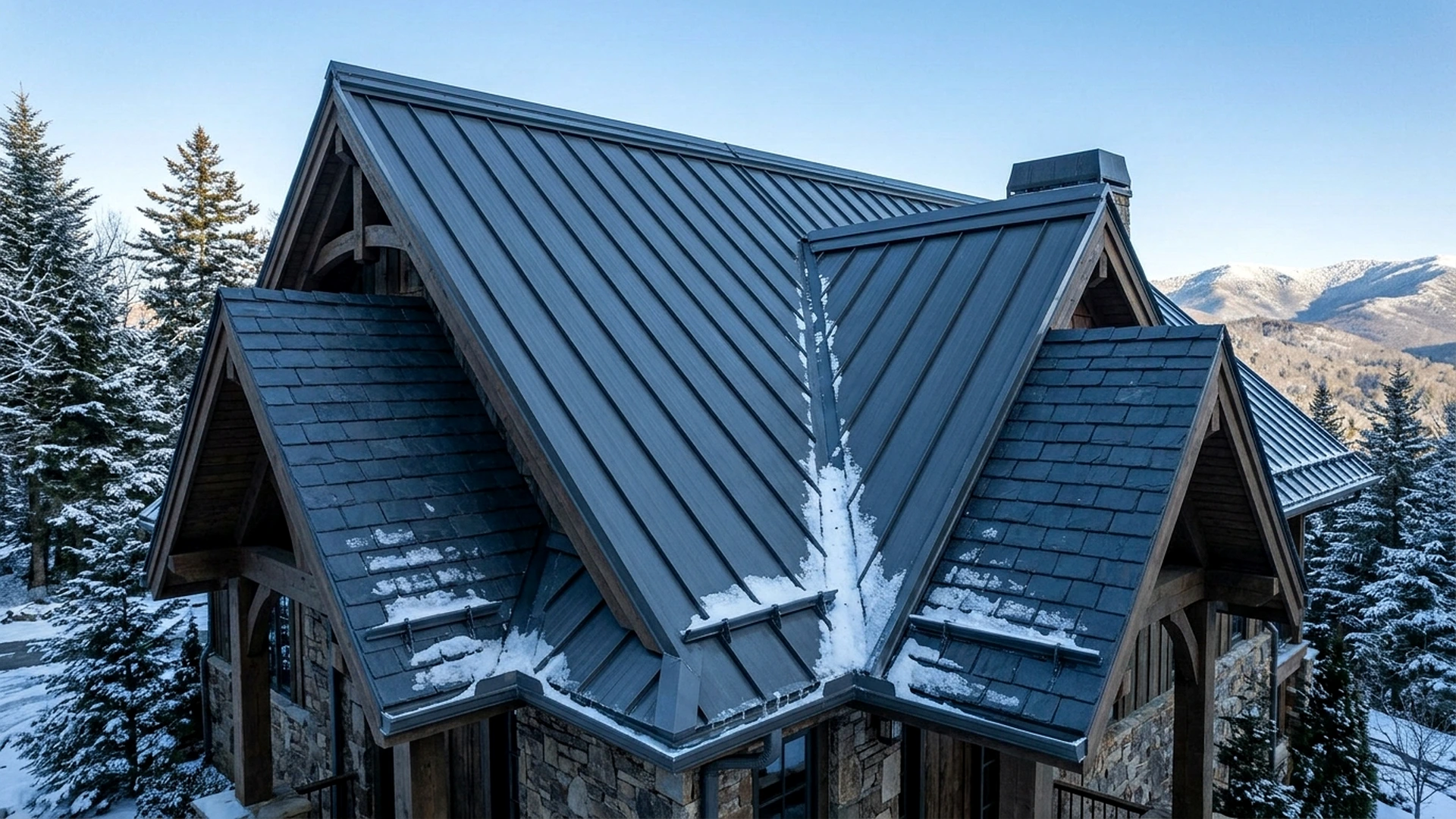
A steep roof may shed rain and snow differently from a lower-slope structure. Valleys, shaded sections, gutters, transitions, and areas around penetrations deserve close attention because water can concentrate in these locations.
Both asphalt shingles and metal roofing may be suitable depending on the house.
The decision should consider:
- Roof slope
- Elevation
- Snow and ice exposure
- Drainage
- Attic ventilation
- Existing roof construction
- Structural requirements
- Tree coverage
- Access for future repairs
- Contractor familiarity with the selected system
Specialty materials such as slate may also fit some mountain homes, particularly properties where architectural character is an important consideration. Structural capacity needs to be evaluated because some roofing systems are significantly heavier than others.
Hail Resistance Should Be Part of the Material Discussion
Hail is sometimes overlooked when homeowners compare roofing materials in North Carolina.
A severe thunderstorm can produce hail capable of damaging more than the visible roof surface. Shingles, metal components, flashing, vents, gutters, skylights, and other exposed materials may all be affected.
Damage can also vary considerably between products within the same material category.
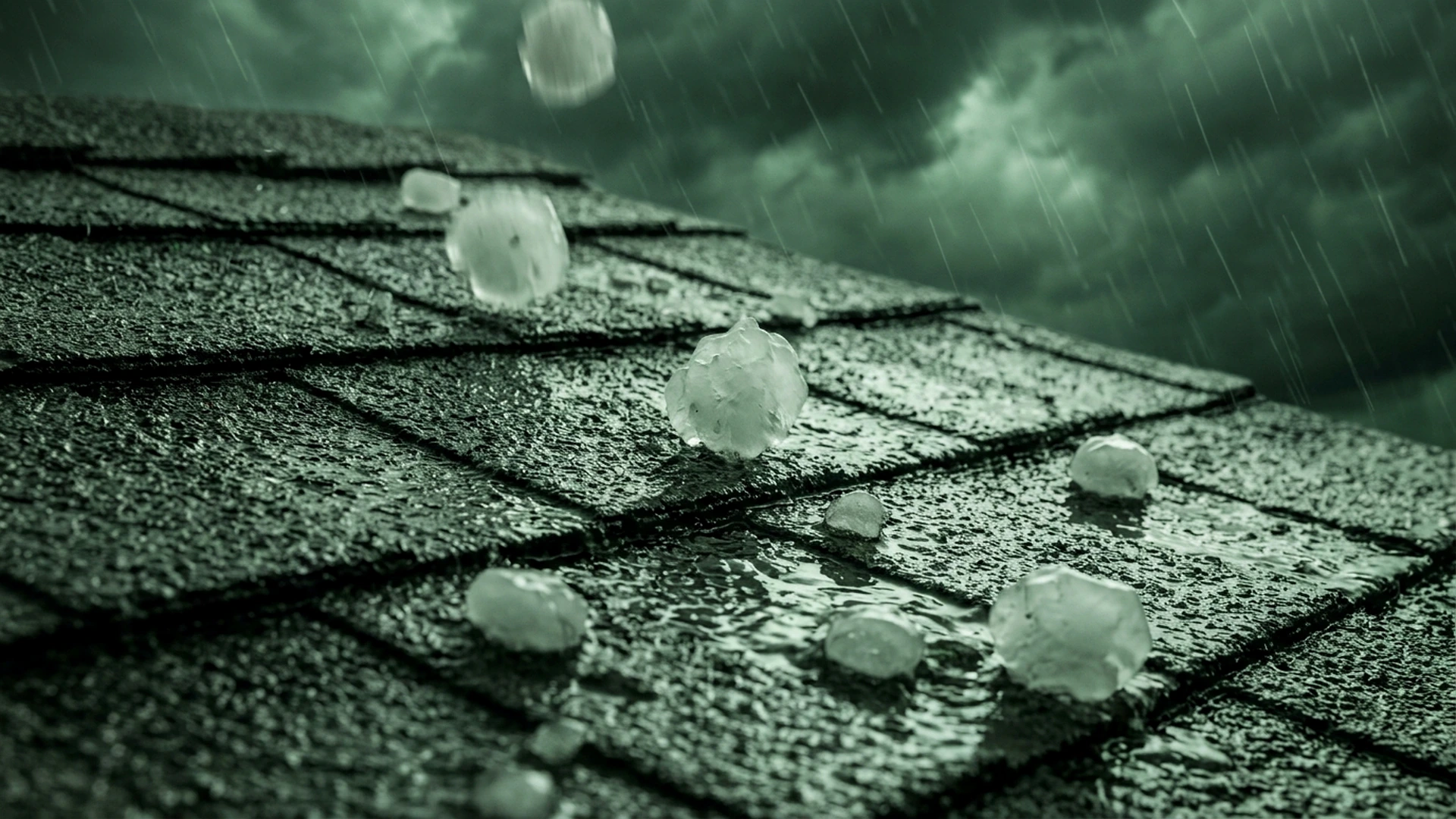
For asphalt shingles, factors such as construction, age, impact classification, substrate, and storm severity can influence the result.
Metal roofing behaves differently. Some systems may remain functional after cosmetic denting, while other damage may require professional evaluation.
No homeowner should assume that a roof is damaged simply because hail occurred nearby, but the opposite assumption can also create problems.
A professional inspection is more reliable than trying to determine roof condition from ground level.
If damage is limited, roof repair services may be enough. More widespread damage, advanced aging, or repeated previous repairs may change the conversation toward replacement.
Roofing Performance Depends on More Than the Material
Homeowners sometimes spend weeks comparing shingles and metal panels but only a few minutes reviewing how the roof will actually be installed.
That can be a mistake.
Roofing materials function as part of a complete system.
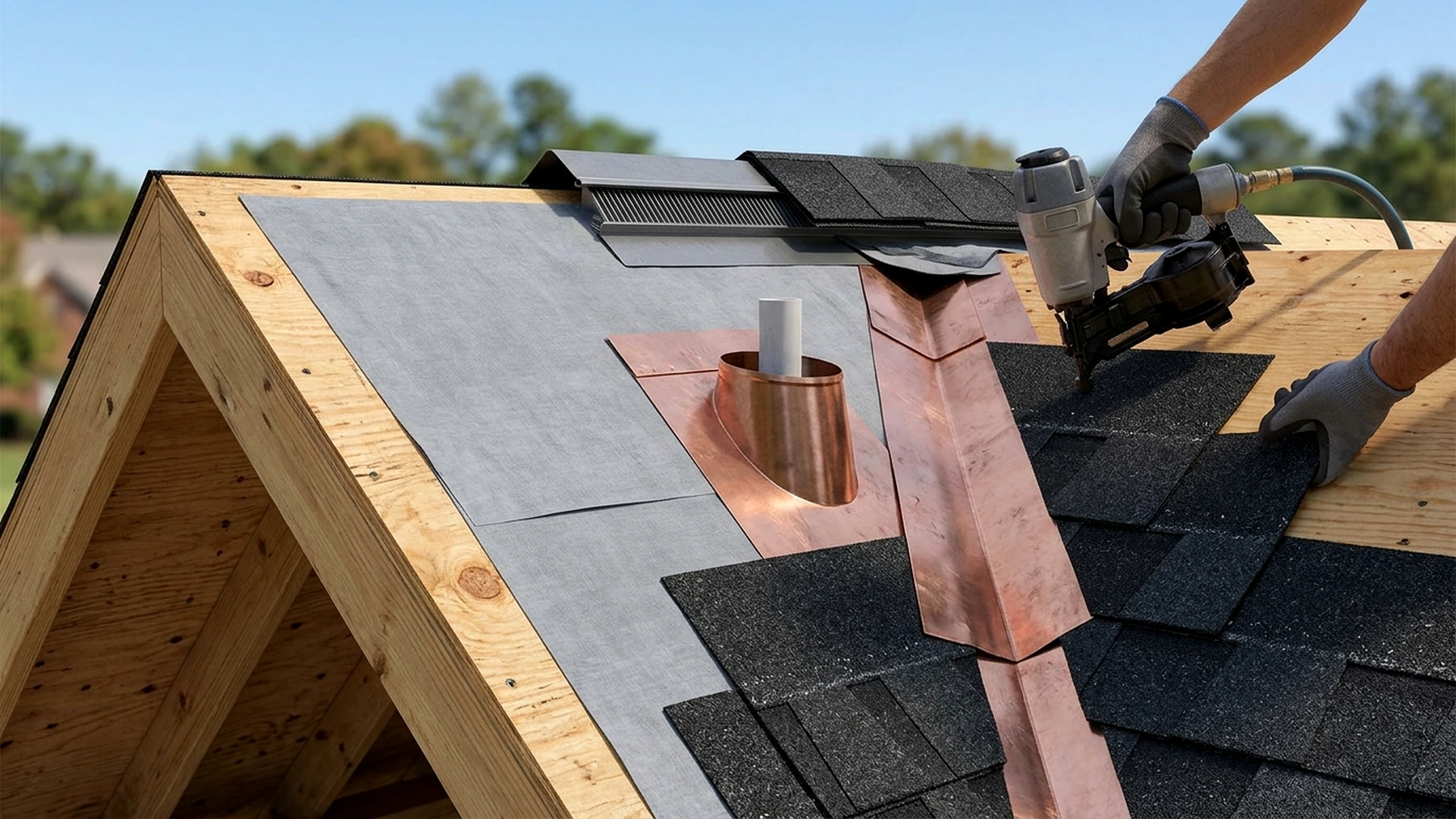
Roof Decking
The roof deck provides the base for the roofing assembly. Soft, deteriorated, damaged, or poorly secured decking can affect the performance of everything installed above it.
A replacement project should include an evaluation of the deck once the old roofing is removed.
Underlayment
Underlayment sits below the visible roofing material and provides an additional layer between the roof covering and the deck.
Different roofing systems may require different underlayment products or installation methods.
Flashing
Many roof leaks begin around transitions rather than directly through the field of the roofing material.
Chimneys, walls, valleys, skylights, vents, plumbing penetrations, dormers, and roof intersections require careful flashing.
Reusing questionable flashing simply to reduce project cost can create future problems.
Ventilation
Attic ventilation can affect moisture conditions and roof performance.
A contractor should evaluate intake and exhaust ventilation as a system instead of simply adding vents without considering airflow.
Roof Edges
Roof edges are particularly important during strong winds.
Starter materials, drip edges, fastening, fascia condition, and installation details should all be addressed as part of the roofing project.
A well-built roof comes from the interaction of these components, not from the shingle or panel alone.
Roof Color Can Affect Heat, but It Is Only One Factor
Homeowners often ask whether a light-colored roof is better for North Carolina summers.
Color can affect how much solar energy a roofing surface absorbs, but roof performance inside the home depends on more than exterior color.
Insulation, ventilation, attic air sealing, roof orientation, surrounding shade, roofing material, and the home’s heating and cooling system can all influence interior comfort.
Imagine two nearby homes using the same roofing product.
One attic has effective insulation and balanced ventilation. The other contains insulation gaps, uncontrolled air leakage, and poor ventilation.
The homeowners may experience very different indoor conditions despite having identical roofing materials.
For that reason, roof color should be considered as one part of the building system rather than treated as a complete energy-efficiency solution.
What About Slate, Tile, Wood, and Synthetic Roofing?
Asphalt shingles and metal may receive most of the attention, but they are not the only options.
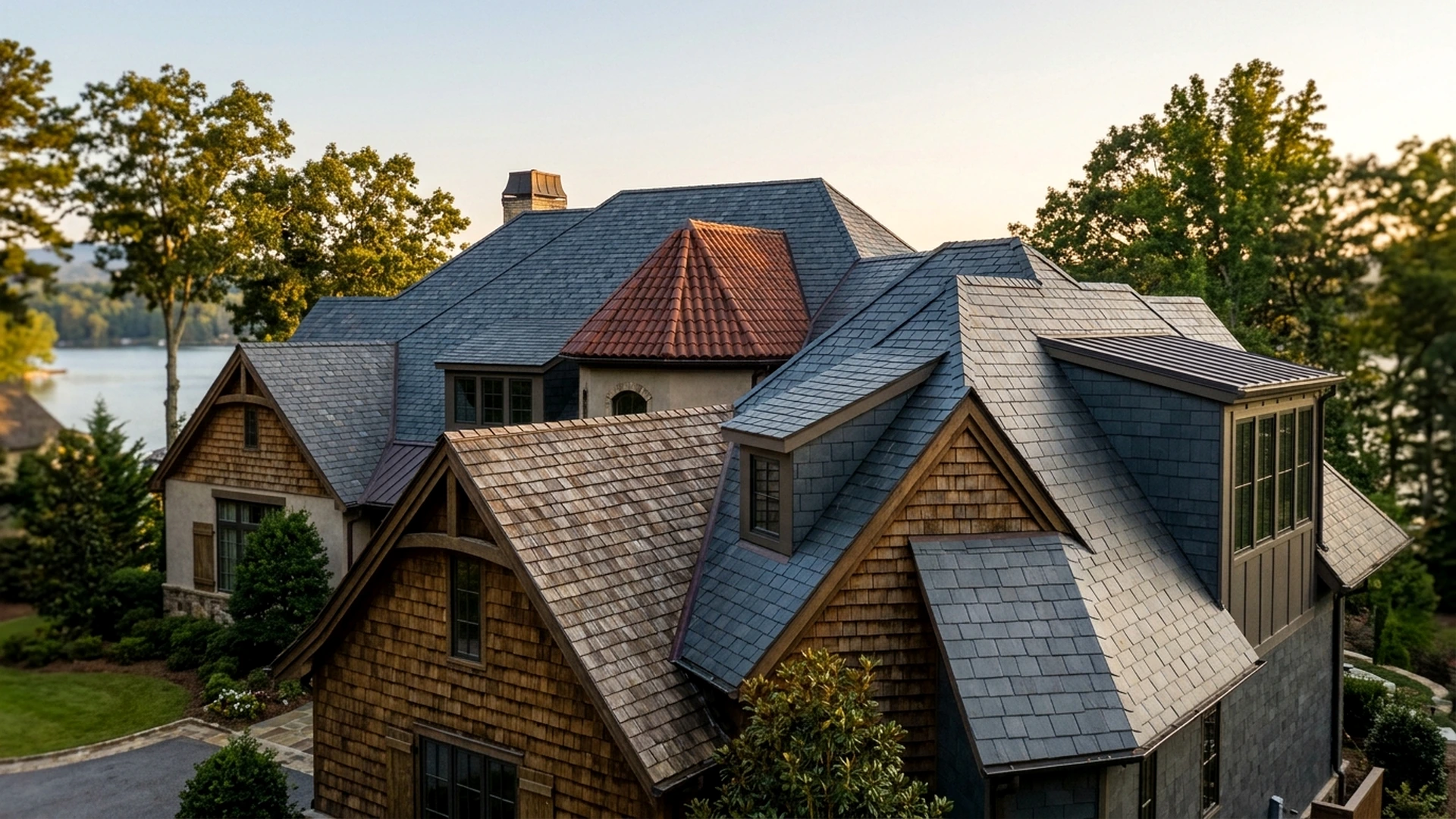
Slate Roofing
Slate is known for its distinctive appearance and long service potential when properly installed and maintained.
Its weight is a major consideration. The structure needs to be suitable for the roofing system, and installation should be handled by professionals familiar with slate.
Repairs can also require specialized skills and matching materials.
Clay and Concrete Tile
Tile can provide a distinctive appearance and performs well in certain applications.
Like slate, weight and structural compatibility need to be considered. Attachment details also matter in areas exposed to strong winds.
Tile may make sense for specific architectural designs, but it is not automatically suitable for every North Carolina home.
Wood Shakes and Shingles
Wood roofing provides a natural appearance that some homeowners prefer.
Maintenance, moisture, shade, ventilation, fire requirements, and local conditions deserve careful review before selecting it.
Homes surrounded by trees or located in consistently shaded environments may require additional consideration.
Synthetic and Composite Roofing
Synthetic products can be manufactured to resemble slate, wood shake, or other traditional roofing materials.
Performance differs significantly between products.
Homeowners should review the actual manufacturer, testing, warranty, installation method, and contractor experience rather than treating “synthetic roofing” as one uniform category.
How to Compare Roofing Estimates Correctly
Price alone is not enough to compare roof replacement proposals.
Two contractors can quote the same general material while proposing very different roofing systems.
Before making a decision, compare what each estimate actually includes.
Ask for details about:
- Roofing manufacturer and exact product line
- Removal of existing roofing
- Disposal of old materials
- Roof deck inspection
- Deck replacement pricing if damaged areas are found
- Underlayment
- Water protection in vulnerable areas
- Starter materials
- Flashing
- Pipe boots and penetrations
- Ridge and hip components
- Ventilation
- Fastening method
- Roof edge details
- Cleanup
- Manufacturer warranty
- Contractor workmanship warranty
This approach can prevent a homeowner from choosing an apparently cheaper proposal that leaves important work outside the quoted scope.
Homeowners who are still determining whether their existing roof needs replacement can review the guide on how to know when a North Carolina home needs a roof replacement.
Which Roofing Material Is the Best Choice for North Carolina?
There is no single roofing material that fits every North Carolina home.
Architectural asphalt shingles are a practical choice for many properties because they offer broad availability, familiar appearance, several product levels, relatively straightforward repairs, and a manageable initial investment.
Metal roofing may suit homeowners who are prepared for a higher initial cost and want a different long-term ownership profile, appearance, or roofing construction.
Slate, tile, wood, and composite roofing can also make sense when the home, structure, architectural style, budget, and local exposure support them.
A simple decision framework can help.
Architectural shingles work well when: affordability, versatility, repairability, and broad product choice are important.
Metal roofing is worth exploring when: long-term ownership, rain shedding, distinctive appearance, and mechanically secured roofing systems are priorities.
Slate or tile may be suitable when: architectural character is important and the structure can support the selected material.
Synthetic roofing can be a good fit when: you want the appearance of a specialty material but prefer to explore modern alternatives.
The final choice should still be based on a physical evaluation of the home.
Planning Your Next Roofing Step
The right roofing material is only part of a successful roof replacement.
The condition of the existing deck, roof pitch, local weather exposure, attic ventilation, drainage, flashing, surrounding trees, previous repairs, home design, budget, and ownership plans all affect the decision.
A homeowner near the coast may focus more heavily on wind and water protection. Someone in the Piedmont may prioritize a roofing system capable of handling a broad mix of heat, thunderstorms, rain, hail, and seasonal temperature changes. A mountain homeowner may need to give more attention to winter conditions, drainage, roof pitch, and freeze-thaw exposure.
That is why material selection should follow a roof inspection rather than come before it.
Lane’s Contracting provides roofing, repair, inspection, storm damage, and replacement services for homeowners throughout its North Carolina service areas.
If your existing roof is approaching replacement or you are comparing materials for an upcoming project, request a free estimate to discuss roofing options that fit your home, location, and project goals.
The post Best Roofing Materials for North Carolina Weather appeared first on Lanes Contracting.
source https://lanescontracting.com/best-roofing-materials-north-carolina/


No comments:
Post a Comment